
1. Introduction
Plagiarism detection has never been more important. With the rise of AI-generated text, the growing emphasis on academic integrity, and the pressure on bloggers and content creators to publish original work, reliable plagiarism checkers are essential.
One of the tools often recommended is PlagiarismDetector.net — a free plagiarism checker that promises quick and accurate results. But does it actually deliver in 2025? Let’s dive in.
2. What is PlagiarismDetector.net?
PlagiarismDetector.net is an online tool designed to identify copied or duplicate content. It targets:
- Students writing essays or research papers.
- Bloggers who want unique posts for SEO.
- Writers & freelancers who need to avoid accidental plagiarism.
The tool comes in a free version (with limitations) and offers premium features for more advanced needs.
3. How It Works
- Paste text directly or upload files (PDF, DOC, TXT).
- Free users can check up to 1000 words per scan.
- Results include a percentage of originality + highlighted overlaps.
- Paid versions add grammar checks, readability analysis, and more.
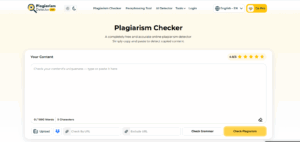
4. What the Official Site Claims
If you only read the official website, you might think PlagiarismDetector.net is the perfect plagiarism checker. The site showcases glowing testimonials that praise the tool’s speed, ease of use, and supposed high accuracy. Screenshots highlight satisfied students, bloggers, and even “academic professionals” claiming the tool helped them submit flawless, original work.
The marketing message is clear: this is a fast, free, and reliable alternative to big-name plagiarism detectors. The site also emphasizes its ability to handle different file formats, support multiple languages, and even detect AI-generated text — though these claims are made without showing much real-world data to back them up.
But here’s the catch: every single review on the site is positive. There’s no sign of negative experiences, mixed opinions, or constructive criticism. In fact, most testimonials sound almost too polished — which raises fair questions about their authenticity and transparency. After all, no tool is perfect, and genuine user feedback usually reflects both pros and cons.
That doesn’t necessarily mean the site is being dishonest, but it does suggest you should treat their testimonials as marketing material rather than objective reviews. To really understand how well PlagiarismDetector.net performs, it’s essential to look at independent tests and feedback from actual users across platforms like Trustpilot and Reddit.
5. Real User Feedback & Independent Reviews
While the official website paints a picture of perfection, the reality is a bit more complicated. Step outside their glowing testimonials, and you’ll find a mix of praise, frustration, and “meh, it works” kind of feedback.
Trustpilot
On Trustpilot, PlagiarismDetector.net holds a rather modest 3.0/5 rating from 19 reviews. The love is there for its simplicity — people appreciate that it’s free, fast, and doesn’t require endless sign-ups. But the biggest complaint? Customer support feels like a black hole. Many users say their questions never got answered, or responses arrived weeks later when the problem no longer mattered.
“I use plagiarismdetector.net as a free one.”
That short but telling comment from Reddit sums it up: this isn’t a tool people gush over, it’s the one they keep in their back pocket for quick, low-stakes plagiarism checks. Nobody’s writing research papers with this as their only safeguard.
Independent Tests
Independent reviewers put the tool under more pressure — and the results show its limits. According to AcademicHelp (2024), PlagiarismDetector.net did well with straightforward plagiarism: 86% detection on human-written text and 81% on web sources. But the moment the text was paraphrased, accuracy dropped to about 60%. And if you try tricks like swapping letters or symbols, the system simply doesn’t notice.
Nocramming (2025) took a friendlier approach, praising the free unlimited scans (though capped at 1000 words per check) and its multilingual support. But they also pointed out the obvious drawbacks: ads, pop-ups, occasional freezes, and — perhaps most importantly — an AI detector that just isn’t reliable. In 2025, when AI-generated writing is everywhere, that’s a serious gap.
Other outlets like Quetext Blog (2025) and AIChief (2025) describe it as “solid but basic.” It gets the job done for blog posts and short essays, but if you’re hoping for Turnitin-level depth, you’ll be disappointed.
My Take
So where does that leave us? To me, PlagiarismDetector.net feels like that old calculator you keep in your drawer. It’s not flashy, it won’t win design awards, but when you need a quick answer, it delivers. For students dashing off an essay or bloggers doing a last-minute originality check, it’s a handy companion. But if you’re submitting a dissertation or preparing content for serious publication, relying on it would be like bringing a pocketknife to a sword fight.
In short:
- Students writing short essays → A decent backup tool.
- Bloggers & freelancers → Works fine for SEO-level originality checks.
- Academics & professionals → Look elsewhere for stronger, more reliable tools.
7. Pros & Cons Summary
| Feature | ✅ Pros | ❌ Cons |
|---|---|---|
| Free Use | Unlimited checks, no login | 1000-word limit, ads & pop-ups |
| Accuracy | Decent for web content | Weak against paraphrasing, AI text, symbol replacement |
| Ease of Use | Simple, quick results | Ad-heavy interface, may lag on big files |
| Support | Some company replies on Trustpilot | Customer service slow/unreliable |
| Extra Features | File uploads, multilingual, AI detection (beta) | AI detector unreliable, basic reporting |
8. Who Should Use It?
✅ Good for:
- Students writing short essays.
- Bloggers and content writers checking quick drafts.
- Freelancers needing a free, simple tool.
❌ Not suitable for:
- Academic researchers.
- Dissertations and theses.
- Professional publishing.
9. Alternatives Worth Considering
-
Quetext Pro – larger database, better accuracy.
Provides DeepSearch™ technology, color-coded similarity highlights, and citation assistance. Great for bloggers, students, and teachers who need reliable detection beyond free tools. -
Scribbr / Turnitin – academic-grade detection.
Trusted by universities worldwide. It scans billions of academic papers, journals, and web sources. Ideal for theses, dissertations, and research projects. -
Grammarly Premium – combines grammar check + plagiarism detection.
Not only detects similarities across billions of web pages but also improves your writing style, grammar, and clarity. Convenient for everyday writing and professional use. -
PlagiarismSearch – Turnitin-style checker without .edu login.
Offers fast and accurate plagiarism reports, AI-content detection, and integration with Google Docs. Works for individuals and businesses, with a focus on confidentiality and user privacy. Interactive reports include highlighted matches, similarity percentages, and source links.
| Tool | Free Version | Accuracy | AI Detection | Integrations | Best For |
|---|---|---|---|---|---|
| PlagiarismDetector.net | Yes – unlimited scans, but 1000 words per check, ads | ✔ Decent (80–86% on basic text, weak on paraphrasing) | ⚠ Beta, unreliable | Basic file uploads (PDF, DOC, TXT) | Students with short essays, bloggers needing quick checks |
| Quetext Pro | Free version up to 500 words | ✔✔ High – DeepSearch™ with contextual analysis | ❌ Not focused on AI text | Citation generator, color-coded highlights | Writers, teachers, bloggers |
| Scribbr / Turnitin | No – institutional access only | ✔✔✔ Very high – academic standard | ✔ Reliable, advanced detection | LMS integrations (Canvas, Moodle, Blackboard) | Universities, researchers, dissertations & theses |
| Grammarly Premium | No free plagiarism checker (only Premium) | ✔ Good – scans billions of web pages | ❌ No dedicated AI detection | Browser extension, MS Word, Google Docs | Professionals, everyday writers, businesses |
| PlagiarismSearch | Free trial available | ✔✔ High – reliable, supports multiple languages | ✔ Detects AI content | Google Docs add-on, API access | Students, businesses, content creators needing privacy |
10. Final Verdict
PlagiarismDetector.net in 2025 is a useful free tool for basic plagiarism checks. It’s quick, simple, and accessible — but comes with limitations such as ads, a 1000-word cap, weak AI detection, and unreliable customer support.
Bottom line:
- Great for everyday use (blogs, short essays, casual writing).
- Not reliable enough for serious academic or professional work.
If you need a free, quick option, PlagiarismDetector.net works.
If accuracy and support matter most — look elsewhere.
Academic Misconduct Policies: How Different Universities Define Plagiarism
Policy snapshot: July 2026. University-wide rules may be supplemented by faculty, department, course, and assessment instructions. Universities broadly agree that students must not present another person’s work or ideas as their own. Yet their academic misconduct policies do not use identical definitions. They differ in how they treat intention, previous work, collaboration, artificial intelligence, non-text […]
The Role of Teachers in Preventing Plagiarism Before It Happens
Plagiarism prevention begins long before a student submits a final paper. By the time copied or poorly attributed material appears in a completed assignment, the student may already have struggled with research, note-taking, paraphrasing, time management, or unclear instructions. Some students plagiarize intentionally. Others do it because they do not understand where their own wording […]
AI Note-Taking Apps 2025: Otter, Notta, Fireflies & Others Compared
AI note-taking apps became much more than transcription tools in 2025. The leading platforms could record meetings, identify speakers, generate summaries, extract action items, answer questions about past conversations, and send information into workplace systems. However, the apps did not offer the same experience. Some joined meetings as visible bots. Others captured audio directly from […]